Search “open Pokémon packs online” and you land on three very different things: free simulators, online stores selling sealed boosters, and platforms where you pay to open a digital pack and receive a real graded card. Only the last one raises the gambling question seriously. Here is where the line sits, using Cardze as a concrete example.
Short answer
Free simulators are not gambling: no money in, nothing of value out. Sealed boosters involve chance, but you buy a product at a fixed price and they are generally treated as collectibles. Paid online pack openings with real cards you can sell back combine the three things most gambling laws look at. Their legal status depends on where you live, and you should treat them as paid, chance-based entertainment, 18+ only.
The three ingredients regulators look at
Most legal definitions of gambling rest on the same three elements, all present at once:
- Consideration: you pay to take part.
- Chance: the outcome is random, not decided by your skill.
- Prize: what you can win has monetary value.
Remove any one of them and you are usually outside gambling law. That is why a free simulator is fine (no consideration, no prize) and why the debate focuses on paid digital packs. In France, for instance, the legal definition of games of chance relies on a financial sacrifice, chance and the hope of a gain, and the sector is regulated by the Autorité nationale des jeux (ANJ). In the US, the rules vary state by state.
How a paid online pack works: the Cardze example
Taking Cardze’s Pokémon packs, checked in October 2026:
- You pay a fixed price: $25 for the Silver pack, $50 for the Gold.
- The outcome is random and the odds are published: for the Silver pack, 40% for a card worth $13 to $18 up to 0.3% for a card worth $300 to $500.
- The card is real, most top hits being PSA-graded slabs, and lands in your vault.
- You can keep it, have it shipped, or sell it back for account balance.
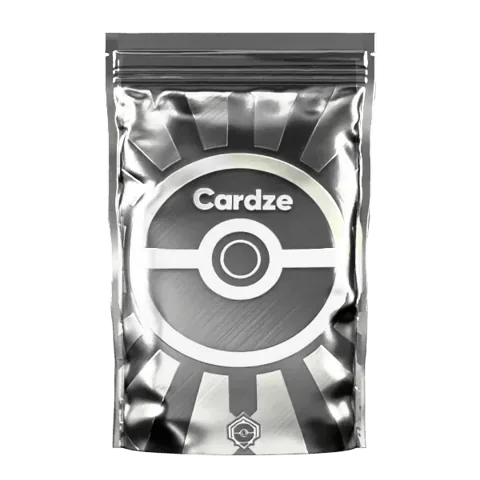
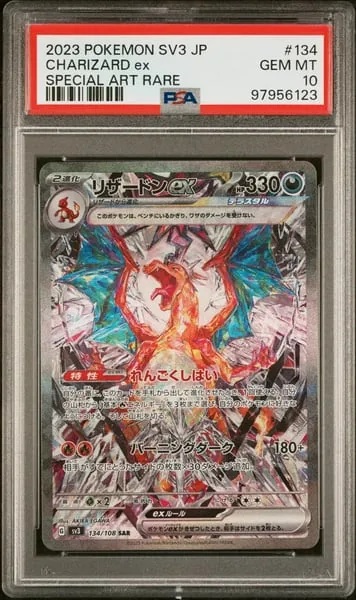
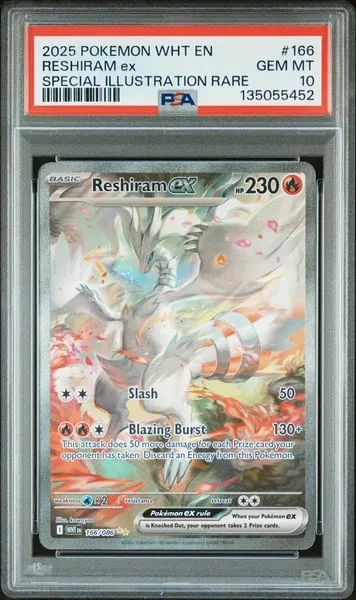
That last point is what moves online packs closest to the gambling definition: a card you can instantly convert back into balance looks a lot like a cash prize. It is also why serious platforms publish their odds and their fairness mechanics, and why you should look for both. See the full odds and every chase card on our Cardze Pokémon packs page.
Simulators, sealed boosters and online packs compared
| Free simulator | Sealed booster | Paid online pack | |
|---|---|---|---|
| You pay | No | Yes, fixed retail price | Yes, fixed pack price |
| Random outcome | Yes | Yes | Yes |
| Odds published | Not relevant | No official odds per booster | Yes, per pack, on serious platforms |
| Real card | No | Yes, raw from the pack | Yes, often graded |
| Sell back to the platform | No | No | Usually yes |
| Gambling question | No | Rarely raised | Depends on your country or state |
See it before you pay
Cardze pack pages have a Demo button, so you can watch an opening play out before spending anything. Signing up with a referral code is free.
Sign up with code FROZYS7rM →How to tell a serious platform from a risky one
1. Odds published per pack
A serious platform shows the chance of each outcome before you buy. Cardze shows six value brackets with a percentage each; Courtyard shows five plus an average item value. No odds, no deposit. We compare the two in Cardze vs Courtyard.
2. Fairness you can verify
Cardze runs a Provably Fair system: the server seed is committed by its SHA-256 hash before you open, you can set your own client seed, and each pack page publishes a hash of its full card pool. That proves the draw was not changed after the fact. It does not make a pack a good deal, it makes the published odds trustworthy.
3. Real cards you can ship
The card should exist physically and be shippable to you. If a platform only lets you hold a balance, it is closer to a casino than to a card shop.
4. Age gate and responsible play
18+ only, clear terms, and no promise that you will make money. Test a small sell-back or withdrawal early, before your balance grows.
Playing responsibly
Set a budget before you open anything and stick to it. Treat each pack as the price of the fun, not as an investment, and never chase a bad run with a bigger pack. Check that paid pack openings are allowed where you live. If spending stops being fun, step away and talk to someone: in the US the National Problem Gambling Helpline is 1-800-GAMBLER, and most countries have a free equivalent.